Hypertension Diet: What to Eat and Avoid for High Blood Pressure
What to Eat with Hypertension
- Potassium-rich foods: bananas, sweet potatoes, spinach, avocado — potassium actively lowers blood pressure by counteracting sodium
- DASH diet foods: fruits, vegetables, whole grains, low-fat dairy, lean proteins
- Magnesium-rich foods: nuts, seeds, leafy greens — supports blood vessel relaxation
- Fatty fish: salmon, mackerel, sardines — omega-3s reduce inflammation and support cardiovascular health
- Beets and beet juice: natural nitrates convert to nitric oxide, which relaxes blood vessels
What foods lower blood pressure naturally?
Foods consistently shown to lower blood pressure include potassium-rich foods (bananas, sweet potatoes, spinach, avocado), beets, fatty fish, and foods following the DASH dietary pattern. AHA 2026 confirms that potassium actively counteracts sodium's blood pressure-raising effect — for people without CKD or ACE inhibitor use, increasing potassium intake is one of the most evidence-supported dietary interventions for hypertension.
How much sodium per day with high blood pressure?
AHA 2026 recommends under 2,300mg of sodium per day for people with hypertension, with greater reductions producing greater blood pressure benefits. Most of the sodium in the average diet comes from processed and restaurant foods rather than the salt shaker — reading labels and choosing fresh whole foods over packaged alternatives is the most effective single dietary change for sodium reduction.
Is the DASH diet effective for hypertension?
Yes — the DASH diet reduces systolic blood pressure by 8-14 mmHg in clinical trials, comparable to some antihypertensive medications. It emphasizes fruits, vegetables, whole grains, low-fat dairy, and lean proteins while limiting sodium, saturated fat, and added sugar — and the effect is additive when combined with medication.
What to Avoid with Hypertension
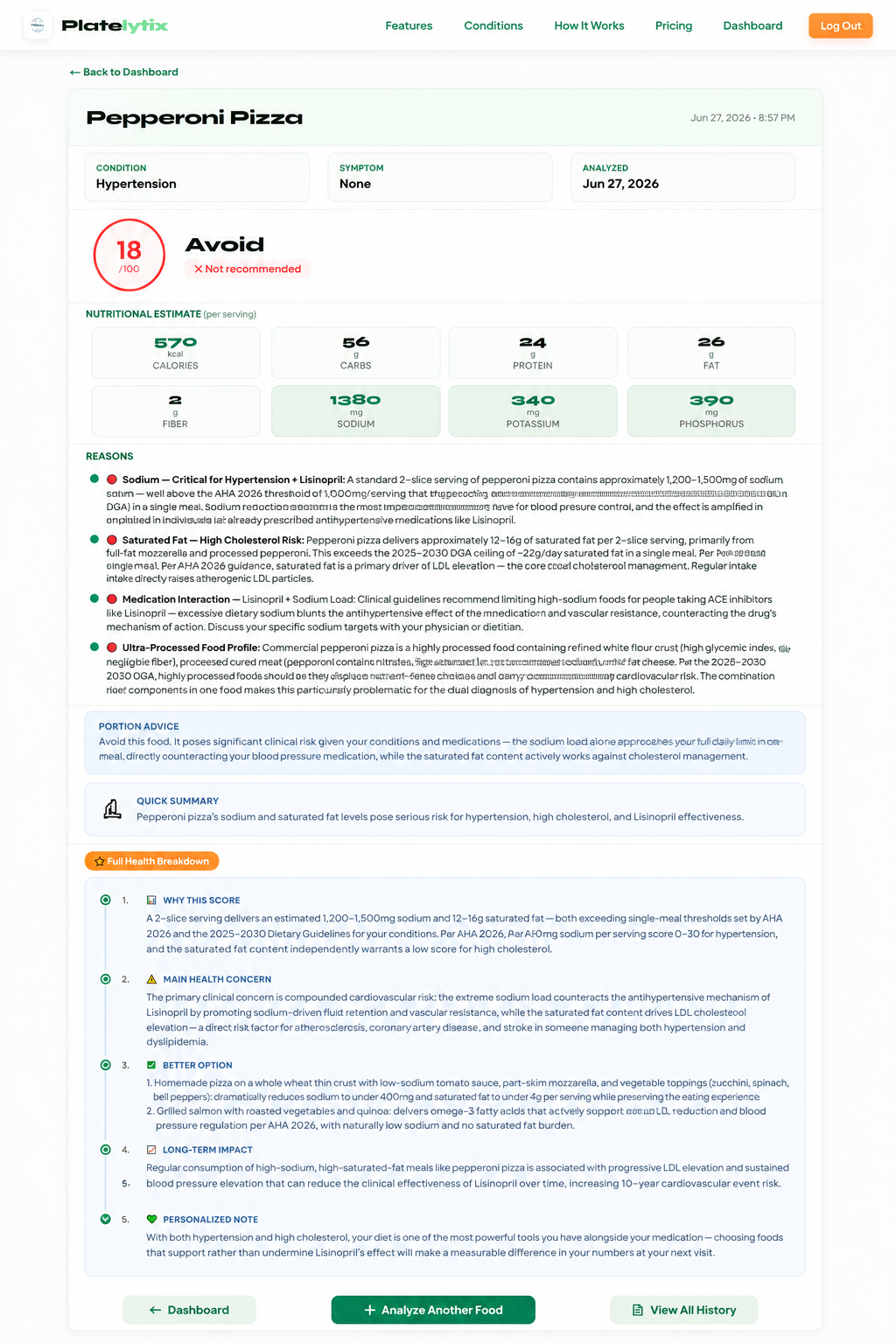
- High-sodium foods: processed meats, canned soups, fast food, pickled foods — AHA 2026 recommends under 2,300mg sodium per day
- Salt substitutes with potassium chloride: only if you are also on ACE inhibitors or ARBs — discuss with your physician first
- Alcohol: more than 1 drink per day raises blood pressure
- Caffeine in excess: can cause temporary BP spikes — monitor your individual response
- Trans fats and saturated fats: raise LDL and increase cardiovascular risk
Can I use salt substitutes with high blood pressure?
Salt substitutes are beneficial for most people with hypertension because they replace sodium chloride with potassium chloride, which actively lowers blood pressure. However, they are dangerous for anyone taking ACE inhibitors, ARBs, or potassium-sparing diuretics like spironolactone — the added potassium can accumulate to dangerous levels. Always discuss salt substitute use with your physician if you take any of these medications.
Medication Interactions for Hypertension
ACE inhibitors and ARBs (Lisinopril, Losartan, Ramipril, Valsartan) raise serum potassium. If you take these medications, high-potassium foods require monitoring — the same foods that lower blood pressure in the general population can cause dangerous potassium accumulation on these drugs. If you also have CKD, potassium restriction may override the hypertension benefit. Discuss your individual potassium targets with your physician.
Diuretics (Furosemide, HCTZ) deplete potassium and sodium — your targets may be different from general hypertension guidelines.