Lisinopril and Potassium-Rich Foods: What You Actually Need to Know
The standard advice is "watch your potassium." Here's what that actually means — and the hidden source most people miss entirely.
If you take Lisinopril for blood pressure or heart failure, you've probably been told to be careful with potassium-rich foods. What most people don't get is why or that the biggest risk isn't just bananas.
Why Lisinopril Raises Your Potassium
Lisinopril works by blocking the renin-angiotensin-aldosterone system (RAAS). One downstream effect: your kidneys excrete less potassium than normal. That's not a side effect you feel. It's invisible until your serum potassium climbs high enough to cause problems. The clinical threshold is 5.0 mEq/L. Above that, you're in hyperkalemia (high potassium) territory. Above 5.5, it's a cardiac risk.
It's worth noting that this isn't unique to Lisinopril. The same potassium-retention mechanism applies to every ACE (Angiotensin Converting Enzyme) inhibitor including Ramipril (Altace), Enalapril (Vasotec), Benazepril (Lotensin), Captopril, Quinapril (Accupril), Fosinopril, etc. If you're on any ACE inhibitor, the dietary guidance in this article applies to you equally. The same is true for ARBs (Angiotensin Receptor Blockers) such as Losartan (Cozaar), Valsartan (Diovan), Olmesartan (Benicar), Irbesartan (Avapro), which work on the same RAAS pathway and carry the same potassium-retention risk. Lisinopril is the most prescribed of the class, which is why it gets named specifically, but the interaction is a class effect, not a drug-specific one.
The Hidden Danger Most People Miss
The food risk most people hear about is bananas, oranges, potatoes. Those are real. But the single most dangerous source of potassium for Lisinopril users isn't a fruit or vegetable. It's salt substitutes.
Products like Morton Salt Substitute, NoSalt, and Nu-Salt replace sodium chloride with potassium chloride. They're aggressively marketed as heart-healthy. Many doctors recommend cutting salt alongside prescribing Lisinopril. The problem is that Lisinopril already reduces your ability to excrete potassium and then a salt substitute floods your system with a concentrated dose of it. The combination can push serum potassium to dangerous levels faster than whole foods would. If you were told to reduce sodium and switched to a salt substitute, this matters for you specifically.
On Lisinopril or another ACE inhibitor? See how your actual meals score for potassium risk against your specific medication.
Score a Meal Free: No Account NeededFoods and Products People Don't Think to Question
The bananas-and-potatoes list is where most articles stop. These are the sources that actually catch people off guard:
Coconut water: marketed heavily as a natural hydration drink and "heart healthy" electrolyte source. One cup contains roughly 600mg of potassium; more per serving than a medium banana. People on Lisinopril drinking coconut water after exercise are unknowingly stacking a significant potassium load on top of a medication already suppressing potassium excretion. There is a published case report of ascending paralysis from hyperkalemia in a patient on RAAS-blocking medication who was consuming coconut water regularly.
Sports drinks and "enhanced" waters: Gatorade, Powerade, and most electrolyte-fortified beverages contain potassium by design. The same goes for "mineral water" and enhanced sparkling waters. Always check the label for added potassium or electrolytes before assuming these are safe.
Dark chocolate and cocoa: 100g of dark chocolate contains over 700mg of potassium. A few squares isn't a crisis, but daily dark chocolate consumption, frequently marketed as heart-healthy adds up fast on a medication that already retains potassium.
Molasses and blackstrap molasses: one tablespoon of blackstrap molasses contains roughly 300mg of potassium. It appears in health food circles as a mineral supplement, a natural sweetener, and a baking ingredient. Almost nobody warns patients on ACE inhibitors about molasses.
Tomato-based products: tomato paste, tomato sauce, ketchup, and canned tomatoes are significantly more concentrated than a fresh tomato. One cup of tomato paste contains over 1,000mg of potassium. Someone eating pasta with marinara or a home-cooked stew may be consuming far more than they realize.
Dried fruits: dehydration concentrates potassium dramatically. A quarter cup of dried apricots contains the same potassium as several fresh ones. Trail mix, granola bars, and "healthy" snack packs frequently contain dried fruit in portion sizes that add up quickly.
Lentils and beans: a cup of cooked lentils contains roughly 730mg of potassium. Legumes are frequently recommended as a heart-healthy protein swap and they are generally beneficial but portion size matters significantly on Lisinopril, especially when CKD is also present.
Potassium-fortified protein powders and meal replacements: many protein shakes, meal replacement bars, and electrolyte supplements add potassium explicitly as a selling point. Someone doing everything right nutritionally may be consuming an additional 200–400mg of potassium per serving from supplements alone, without realizing that the medication context changes everything.
Noni juice: specifically called out by NIH guidelines as a high-risk potassium source for ACE inhibitor users. Most physicians don't mention it because most physicians don't ask about it.
Not sure what's safe to eat with all these hidden potassium sources? CookGuide builds meals around your medications and labs, no guesswork.
Try CookGuideWho's Most at Risk?
The risk compounds significantly when other factors are present. Chronic Kidney Disease (CKD) reduces the kidney's ability to clear potassium independently of the medication. Diabetes affects aldosterone signaling. Age over 65 slows potassium excretion even in otherwise healthy kidneys. Being on spironolactone or another potassium-sparing diuretic alongside Lisinopril stacks the risk further.
A study of 5,171 CKD patients starting Lisinopril found a 90-day hyperkalemia risk of 2.8% overall but 6.9% in the highest-risk group. That's not theoretical.
If you're managing CKD and diabetes alongside a blood pressure medication, the dietary conflicts run deeper: we cover that specifically in CKD and Type 2 Diabetes: What to Eat When You Have Both.
If you're managing both CKD and hypertension alongside Lisinopril, the dietary picture is more complex: potassium limits tighten significantly. These recipes are filtered for both conditions simultaneously:
Recipes filtered for CKD and hypertension simultaneously: sodium and potassium already factored in.
Browse RecipesWhat This Actually Means for Your Plate
This isn't a reason to avoid vegetables. The practical concern isn't any single food. It's the cumulative potassium load across your full diet, including the non-obvious sources above. The guidance is more targeted than a blanket restriction:
- Avoid salt substitutes containing potassium chloride unless your physician has explicitly cleared it with your current labs
- Keep high-potassium whole foods moderate and consistent: don't eliminate, don't binge
- Get your serum potassium checked regularly, especially if your diet or medications have changed
- Cooking method matters: boiling and draining vegetables reduces their potassium content by 30–50%
A Note on the Full Picture
Lisinopril doesn't exist in isolation. Most people taking it are also managing hypertension, CKD, diabetes, or some combination, each with their own dietary considerations that can conflict. The potassium guidance for Lisinopril is different from the potassium guidance for someone whose serum K is actually low, or for someone on a thiazide diuretic that depletes potassium.
Platelytix was built specifically for this kind of complexity: scoring foods against your full medication and condition profile simultaneously, not just one variable at a time.
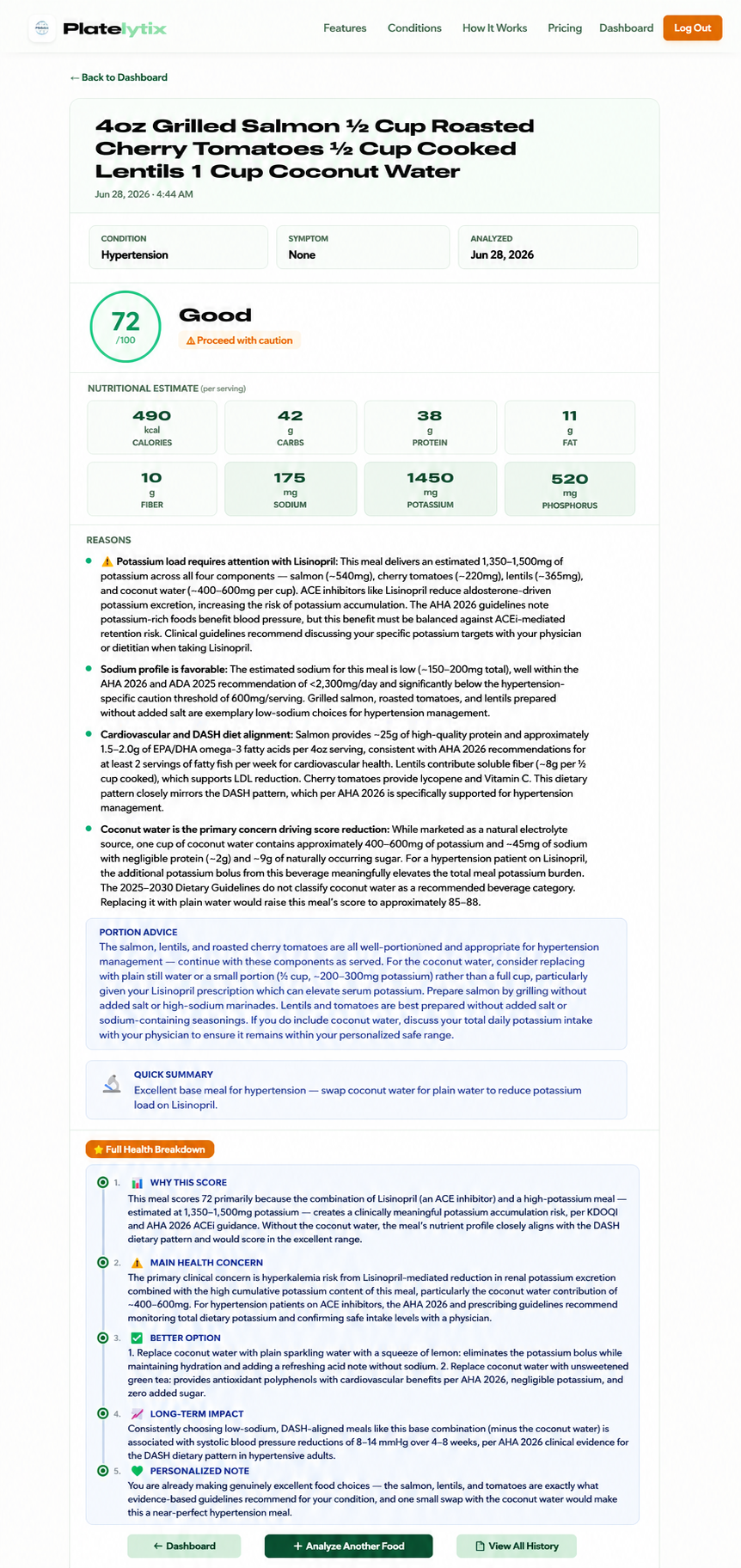
Below is a real Platelytix output for a user with hypertension on Lisinopril, run against a meal that looks healthy on the surface. The score isn't alarming, but the full health breakdown flags notable hyperkalemia risk based on current guidelines.
HTN-Friendly Meals That Work Around This
Managing potassium on Lisinopril doesn't mean giving up flavor or variety. The goal is building meals that are genuinely low in potassium stacking risk not just "healthy" by general standards. Platelytix has a recipe library scored specifically for hypertension, with sodium and potassium already factored in.
Set up your profile with Lisinopril (or any ACE inhibitor or ARB) and your labs, and get potassium risk scored specifically for you.
Set Up Your Health Profile Score a MealKey takeaways: Lisinopril causes potassium retention by blocking aldosterone production, making high-potassium foods and salt substitutes risky. Most people don't need to eliminate all potassium-rich foods. However, the biggest immediate danger is potassium-containing salt substitutes like Morton Salt Substitute, NoSalt, and Nu-Salt. High-sodium foods also directly counteract Lisinopril's blood pressure benefit and should be limited to under 2,300mg per day.
How Much Potassium Is in the Foods You Need to Watch?
Understanding specific potassium amounts helps you make practical decisions rather than guessing. Key amounts per serving: banana one medium contains 422mg, baked potato 610mg, cooked spinach 840mg per cup, avocado 708mg per half, orange juice 496mg per cup, coconut water 600mg per cup, tomato sauce 728mg per half cup, cooked lentils 730mg per cup, and dried apricots approximately 750mg per quarter cup.
Foods that deserve attention beyond the standard list include kiwifruit (about 215mg per fruit), cantaloupe (427mg per cup), winter squash (494mg per cup), asparagus (288mg per cup), and nectarines (285mg each). These appear frequently in healthy eating plans and are easy to overlook on Lisinopril.
High-Sodium Foods That Directly Counter Lisinopril's Effect
Lisinopril lowers blood pressure but high dietary sodium causes the body to retain water, increasing blood volume and raising blood pressure right back. A high-sodium diet doesn't just fail to help on this medication; it actively works against it. AHA 2026 guidelines recommend staying under 2,300mg of sodium per day for people with hypertension, with 1,500mg being the more effective target for blood pressure control.
Most excessive sodium comes from processed and packaged foods rather than the salt shaker. High-sodium foods to limit include canned soups, frozen dinners, cured and processed meats like bacon, sausage, and deli meats, fast food, pizza, chips and crackers, packaged sauces and condiments, and restaurant meals. Reading nutrition labels and prioritizing home-cooked meals from whole ingredients is the most effective dietary change for someone on Lisinopril.
Safe Lower-Potassium Alternatives
Managing potassium on Lisinopril is not about eliminating all fruits and vegetables. It's about choosing moderate-potassium options more consistently and keeping higher-potassium foods to controlled portions. Safe choices include berries such as strawberries, blueberries, and grapes, apples, cabbage, green beans, cucumber, broccoli in moderate portions, lettuce, carrots, eggs, white rice, pasta, chicken, and fish. These provide solid nutrition without the concentrated potassium load of bananas, avocados, potatoes, or tomato products.
For flavor without sodium or potassium risk, fresh herbs, black pepper, garlic, ginger, lemon juice, and vinegar are all safe options on Lisinopril. These add meaningful flavor without the electrolyte risks of potassium-based salt substitutes.
Illness and Dehydration Compound the Risk
Potassium risk on Lisinopril is not static; it changes with your physical state. Vomiting, diarrhea, or inadequate fluid intake temporarily reduces kidney function, making dangerous potassium accumulation more likely even at dietary potassium levels that would otherwise be safe. During any acute illness where you are not eating or drinking normally, the combination of reduced kidney clearance and Lisinopril's potassium retention effect can push serum potassium into dangerous territory faster than expected. This is worth discussing with your physician so you know what to monitor and when to seek attention if you become ill.
Can I Drink Alcohol While Taking Lisinopril?
Alcohol should be limited while taking Lisinopril. Shortly after drinking, alcohol lowers blood pressure and increases the risk of dizziness and lightheadedness, an effect that compounds with Lisinopril's own blood pressure-lowering action. Over time, moderate to heavy alcohol consumption raises blood pressure and directly undermines the medication's benefit. If you choose to drink, discuss safe limits with your physician based on your current blood pressure readings and overall health history.
Can I Drink Coffee While Taking Lisinopril?
Yes. Coffee and caffeine in moderation are safe on Lisinopril and do not interfere with how the medication works. Unlike thyroid medications where caffeine affects absorption, Lisinopril's mechanism is not disrupted by caffeine. The temporary blood pressure effect of caffeine is modest in regular coffee drinkers. Moderate coffee consumption does not require avoidance on this medication.
Should Lisinopril Be Taken in the Morning or at Night?
Lisinopril can be taken in the morning or at night. The most important thing is taking it at the same time every day to maintain consistent medication levels. It can be taken with or without food. Some patients prefer evening dosing because any initial dizziness from blood pressure lowering is less disruptive during sleep. Consistent daily timing matters more than which time of day you choose.
How Long Does Lisinopril Take to Work?
Lisinopril begins lowering blood pressure within a few hours of the first dose. The full blood pressure-lowering effect typically takes 2 to 4 weeks to establish. During this period, dietary changes (such as reducing sodium, avoiding salt substitutes, moderating high-potassium foods) compound the medication's effectiveness. Patients who combine Lisinopril with meaningful dietary changes consistently achieve better blood pressure control than medication alone provides.
Disclaimer: This article is for educational purposes only and does not constitute medical advice. Always consult your nephrologist or renal dietitian before making dietary changes.
- Johnson ES, Weinstein JR, Thorp ML, et al. "Predicting the risk of hyperkalemia in patients with chronic kidney disease starting lisinopril." Pharmacoepidemiology and Drug Safety, 2010;19:266–272.
- Hemachandra KHDT, Dayasiri MBKC, Kannangara T. "Acute Ascending Flaccid Paralysis Secondary to Multiple Trigger Factor Induced Hyperkalemia." Case Reports in Neurological Medicine, 2018.
- KDIGO 2024 CKD Evaluation and Management Guidelines.
- National Kidney Foundation. KDOQI Clinical Practice Guidelines for CKD, 2020.
- National Institutes of Health, Office of Dietary Supplements: potassium and drug-nutrient interactions.