Type 2 Diabetes Diet: What to Eat and Avoid
Key takeaways: Type 2 diabetes management focuses on stable blood sugar through consistent, balanced eating — not eliminating all carbohydrates. ADA 2025 recommends individualized carbohydrate targets, regular meal timing, and dietary patterns like Mediterranean and DASH over any single restricted food list. The foods you eat, when you eat them, and how much you eat all matter equally.
What to Eat with Type 2 Diabetes
- Non-starchy vegetables: broccoli, spinach, kale, zucchini, peppers, tomatoes, carrots, green beans — high fiber, low glycemic impact, fill half your plate at every meal
- Lean proteins: skinless chicken breast, salmon, sardines, tuna, mackerel, eggs, tofu, tempeh, legumes — protein has minimal effect on blood sugar and slows glucose absorption from carbohydrates eaten at the same meal
- Low-glycemic carbohydrates in controlled portions: oats, quinoa, lentils, sweet potato, wild rice, 100% whole grain bread with at least 3g fiber per slice, barley
- Healthy fats: avocado, olive oil, walnuts, almonds, unsalted nuts — slow glucose absorption and improve insulin sensitivity
- High-fiber foods: beans, chia seeds, flaxseed, legumes — soluble fiber slows glucose absorption and directly improves A1C
- Dairy: plain low-fat Greek yogurt, cottage cheese, low-fat milk, Parmesan or ricotta cheese — dairy improves insulin sensitivity and the protein slows glucose absorption. Avoid flavored yogurts which often contain as much added sugar as a candy bar
- Fatty fish twice weekly: salmon, mackerel, sardines, albacore tuna, herring — omega-3 fatty acids reduce triglycerides and cardiovascular risk without affecting blood sugar
The Diabetes Plate Method
The American Diabetes Association's Plate Method is the most practical visual meal planning tool for Type 2 diabetes — fill half your plate with non-starchy vegetables, one quarter with lean protein, and one quarter with carbohydrates. This approach controls carbohydrate portions automatically without counting every gram. Add a small piece of fruit or a serving of dairy and water or unsweetened tea to complete the meal. The plate method works for home cooking, restaurant meals, and takeout — the proportions translate to any plate size and require no counting or calculation.
How Many Carbs Per Day with Type 2 Diabetes?
ADA 2025 does not set a universal carbohydrate target — it recommends individualized goals based on your A1C, medications, and lifestyle. Most people with Type 2 diabetes do well with 45-60g of carbohydrates per meal from whole food sources. Carbohydrate quality matters as much as quantity — 45g of carbohydrates from lentils produces a very different blood sugar response than 45g from white bread. Your diabetes care team should set your specific target based on your current A1C, medication regimen, and individual glucose monitoring results.
Can I Eat Fruit with Type 2 Diabetes?
Yes — whole fruits are recommended by ADA 2025 as part of a healthy diabetes diet because the fiber in whole fruit slows glucose absorption significantly. Avoid fruit juice, which removes fiber and spikes blood sugar rapidly. Lower-glycemic fruit choices include apples, berries, cherries, peaches, pears, plums, grapefruit, and oranges. Higher-glycemic fruits like watermelon, pineapple, and overripe bananas should be eaten in smaller portions. A whole apple scores very differently than apple juice for someone managing Type 2 diabetes — the fiber is what makes the difference.
What Foods Lower A1C Naturally?
Foods that consistently support A1C reduction include oats and barley (beta-glucan soluble fiber slows glucose absorption), legumes, non-starchy vegetables, fatty fish, and foods with a low glycemic index. ADA 2025 emphasizes that dietary patterns — Mediterranean and DASH in particular — reduce A1C more effectively than targeting individual foods. The Mediterranean pattern specifically has the strongest evidence base, with trials showing A1C reductions of 0.3-0.5% compared to control diets in people with Type 2 diabetes.
Meal Timing and Eating Schedule
When you eat matters as much as what you eat for blood sugar management — eating at consistent, regular mealtimes helps your body use insulin more effectively. Skipping meals causes blood sugar swings and often leads to overeating at the next meal, creating a large glucose spike. If you take insulin or sulfonylureas, skipping meals significantly increases hypoglycemia risk. ADA guidelines support 3 consistent meals per day at similar times, with small snacks only if needed. Avoid eating large amounts of carbohydrates in a single sitting — distributing them evenly across meals produces more stable blood sugar than front-loading or back-loading your carbohydrate intake.
Healthy Snacks for Type 2 Diabetes
Snacks can be part of a diabetes-friendly diet when they combine protein or fat with fiber — this combination slows glucose absorption and prevents blood sugar spikes between meals. Good options include unsalted nuts (a small handful), carrot or celery sticks with hummus, a small apple with a tablespoon of almond butter, plain Greek yogurt with a few berries, a hard-boiled egg, or homemade popcorn without added butter or sugar. Avoid snack foods labeled "sugar-free" without reading the label — they often contain sugar alcohols that still raise blood glucose.
Can I Have Dessert with Type 2 Diabetes?
Yes — people with Type 2 diabetes can have desserts in controlled portions, with preference for options that minimize blood sugar impact. Lower-impact dessert options include fresh fruit salad without added sugar, small amounts of dark chocolate (70% or higher cocoa), sugar-free gelatin, and frozen fruit bars made without added sugar. The key is portion size and frequency — a small dessert after a balanced meal produces a much smaller glucose response than the same dessert eaten alone. Account for carbohydrate content even in lower-impact dessert options.
What to Avoid with Type 2 Diabetes
- Sugar-sweetened beverages: soda, juice, sweet tea, energy drinks, sweetened coffee drinks — the single most impactful food category to eliminate. Liquid sugar spikes blood glucose faster than almost any food because there is no fiber to slow absorption
- Refined carbohydrates in large portions: white bread, white rice, white pasta, pastries, crackers, bagels — high glycemic load with minimal nutritional value
- Added sugar: ADA 2025 recommends minimizing added sugar — no safe threshold established for diabetes management
- Ultra-processed foods: chips, packaged snacks, fast food, frozen meals — high in refined carbs, sodium, and low in fiber
- Saturated fats: butter, fatty red meat daily, full-fat dairy in large amounts, tropical oils — raise LDL cholesterol which is already elevated in most people with Type 2 diabetes
- Trans fats: partially hydrogenated oils in some packaged baked goods — AHA recommends elimination. Check ingredient labels
- Large portions of any carbohydrate: portion size matters as much as food type — a large serving of even "healthy" carbohydrates still raises blood glucose significantly
What Foods Spike Blood Sugar the Most?
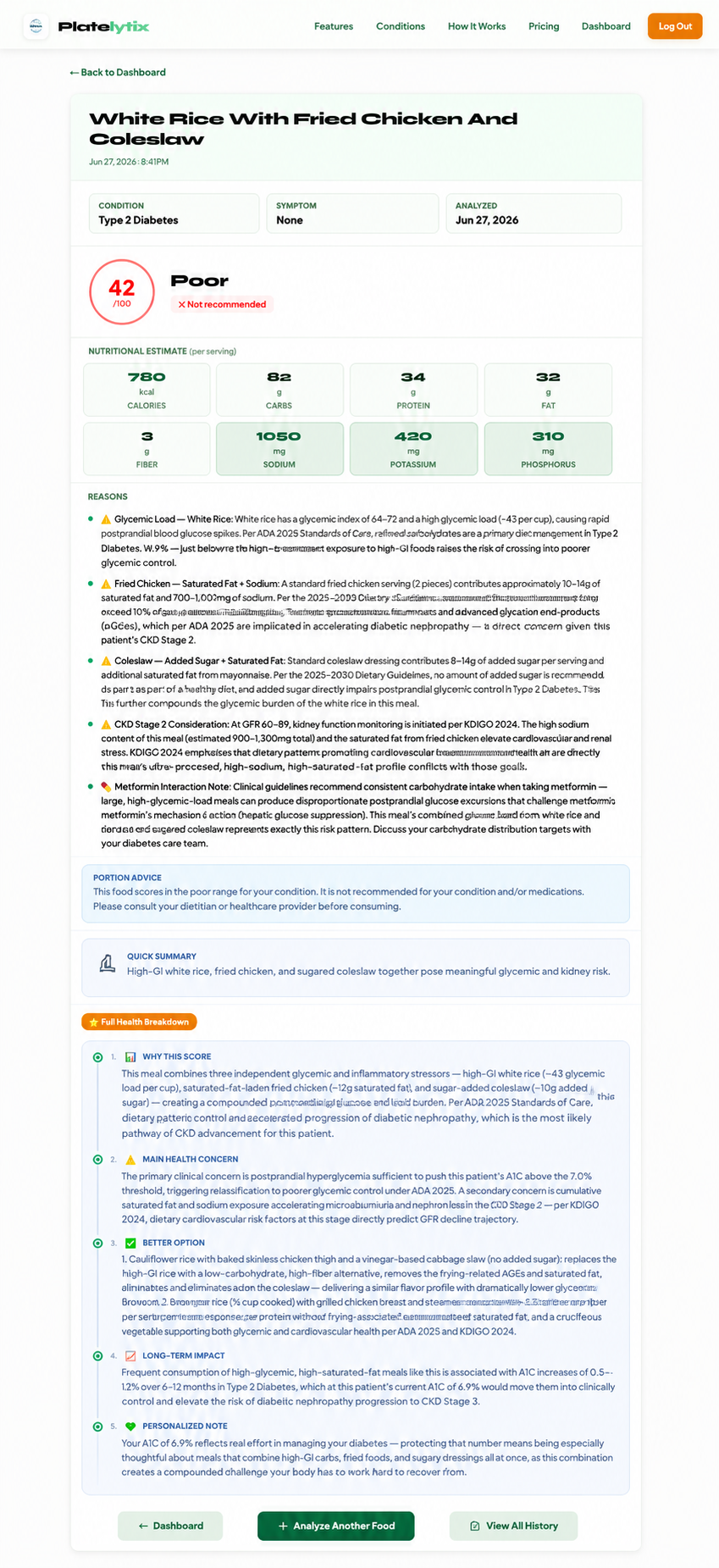
The highest glycemic impact foods include sugar-sweetened beverages, white bread, white rice in large portions, pastries, candy, sweetened breakfast cereals, and ultra-processed snack foods. ADA 2025 specifically flags added sugar and refined carbohydrates as foods to minimize — these score 0-30 on the Platelytix scoring engine for Type 2 diabetes regardless of portion size. Liquid forms of sugar (juice, soda, sweet tea) are more damaging than solid forms because absorption is faster without any fiber to buffer the glucose spike.
The Sugar-Free Label Warning
"Sugar-free" does not mean carbohydrate-free or blood sugar-safe — most sugar-free products contain sugar alcohols (xylitol, erythritol, sorbitol, maltitol) which are carbohydrates and still raise blood glucose, though more slowly than regular sugar. Always check the total carbohydrate content on the Nutrition Facts label, not just the sugar line. Net carbohydrates — total carbs minus fiber — is the most relevant figure for blood sugar management. A "sugar-free" cookie may contain 25g of carbohydrates from sugar alcohols and still meaningfully impact your blood sugar.
How to Read Food Labels for Diabetes
The Nutrition Facts label is the most important tool for diabetes food management — focus on total carbohydrates per serving and serving size first, before any other information on the package. Subtract dietary fiber from total carbohydrates to get net carbohydrates — the most accurate measure of glucose impact. Check the ingredients list for hidden sugars: corn syrup, fructose, dextrose, maltose, cane juice, and agave are all sugar under different names. If sugar appears in the top three ingredients, reconsider the product. Serving sizes are frequently smaller than what people actually eat — a product with 25g carbs per serving that you eat two portions of provides 50g of carbohydrate.
Alcohol and Type 2 Diabetes
Alcohol affects blood sugar in complex ways — it initially causes the liver to stop releasing glucose, which can cause hypoglycemia, especially if you take insulin or sulfonylureas. Several hours later, some alcoholic beverages (beer, sweet wine, mixers) raise blood sugar due to their carbohydrate content. ADA guidelines suggest a maximum of one drink per day for women and two for men if alcohol is consumed at all. Never drink on an empty stomach. Do not skip meals when drinking. Monitor blood sugar before and after to understand your individual response. If you take Metformin, heavy alcohol use raises lactic acidosis risk — occasional moderate drinking is generally low risk but discuss with your physician.
Weight Loss and Type 2 Diabetes
For people with Type 2 diabetes who are overweight, weight loss of 5-10% of body weight produces meaningful improvements in blood sugar, blood pressure, and cholesterol — sometimes enough to reduce or eliminate medication. ADA 2025 supports weight loss as a primary treatment goal for overweight Type 2 diabetes patients, particularly those diagnosed recently when beta cell function is still relatively intact. The dietary changes that manage blood sugar — reducing refined carbohydrates, increasing fiber, controlling portions — naturally support weight loss without requiring a separate diet plan. GLP-1 agonists (Ozempic, Victoza) and SGLT2 inhibitors (Jardiance, Farxiga) both produce meaningful weight loss alongside blood sugar reduction and are preferred medications for overweight patients with Type 2 diabetes.
Medication Interactions for Diabetes
If you take Metformin, consistent carbohydrate intake helps maintain stable blood sugar and always take Metformin with food to reduce GI side effects. Metformin also depletes B12 over time — discuss B12 monitoring with your physician, especially if you notice tingling or numbness in your hands or feet. If you are on a GLP-1 agonist (Ozempic, Victoza, Trulicity), prioritize protein at every meal to protect muscle mass during weight loss and avoid high-fat foods which significantly worsen GLP-1 nausea. If you take an SGLT2 inhibitor (Jardiance, Farxiga), avoid very low carbohydrate or ketogenic diets without physician supervision due to euglycemic DKA risk, and stay well hydrated as these medications increase urinary output.
Diabetes with Hypertension — Additional Restrictions
If you have both Type 2 diabetes and high blood pressure, add sodium restriction to your diabetes dietary plan — ADA 2025 and AHA recommend under 2,300mg of sodium per day. Most people with Type 2 diabetes also develop hypertension — the conditions share the same risk factors and dietary responses. Reducing sodium, limiting caffeine, and avoiding saturated fat serves both conditions simultaneously. If you take an ACE inhibitor or ARB for blood pressure alongside your diabetes medications, discuss potassium-rich food intake with your physician as these medications raise serum potassium.
Medication Interactions for Diabetes
If you take Metformin, consistent carbohydrate intake helps maintain stable blood sugar. Metformin also depletes B12 over time — discuss B12 monitoring with your physician. If you are on a GLP-1 agonist (Ozempic, Victoza), prioritize protein at every meal to protect muscle mass during weight loss. If you take an SGLT2 inhibitor (Jardiance, Farxiga), high-sugar foods still significantly impact blood glucose despite the medication.