CKD and Type 2 Diabetes Diet: Quick Food Reference
What to Eat with Both CKD and Diabetes
- Egg whites: high protein, low phosphorus, no potassium — ideal for the CKD-diabetes combination
- Controlled portions of chicken or fish: moderate protein within your CKD target, minimal glycemic impact
- Low-potassium, low-glycemic vegetables: green beans, cabbage, cauliflower (boiled), cucumbers — satisfy both conditions
- White rice over brown: brown rice is high in phosphorus — white rice is lower in phosphorus and still needs portion control for blood sugar
- Small frequent meals: help manage blood sugar spikes while keeping individual meal potassium and phosphorus loads lower
What can I eat if I have both diabetes and kidney disease?
The safest foods for both CKD and diabetes simultaneously are egg whites, fresh chicken or fish in controlled portions, low-potassium low-glycemic vegetables like green beans, cabbage, and cucumber, and white rice in small portions. KDIGO 2024 and ADA 2025 generally prioritize CKD electrolyte restrictions over blood-sugar guidance when lab values are abnormal.
Is brown rice safe for diabetic kidney disease?
No — brown rice is higher in phosphorus and carries a higher glycemic load than white rice, which is the better choice in small, controlled portions for both phosphorus and blood sugar management.
Whose dietary advice do I follow with CKD and diabetes?
When CKD and diabetes guidelines conflict, prioritize CKD electrolyte restrictions when lab values are abnormal — hyperkalemia and hyperphosphatemia carry immediate clinical risks. A renal dietitian experienced in both conditions is the best resource for navigating the combined diagnosis. For the full reasoning and food-by-food breakdown, see our complete CKD and Type 2 diabetes guide.
What to Avoid with Both CKD and Diabetes
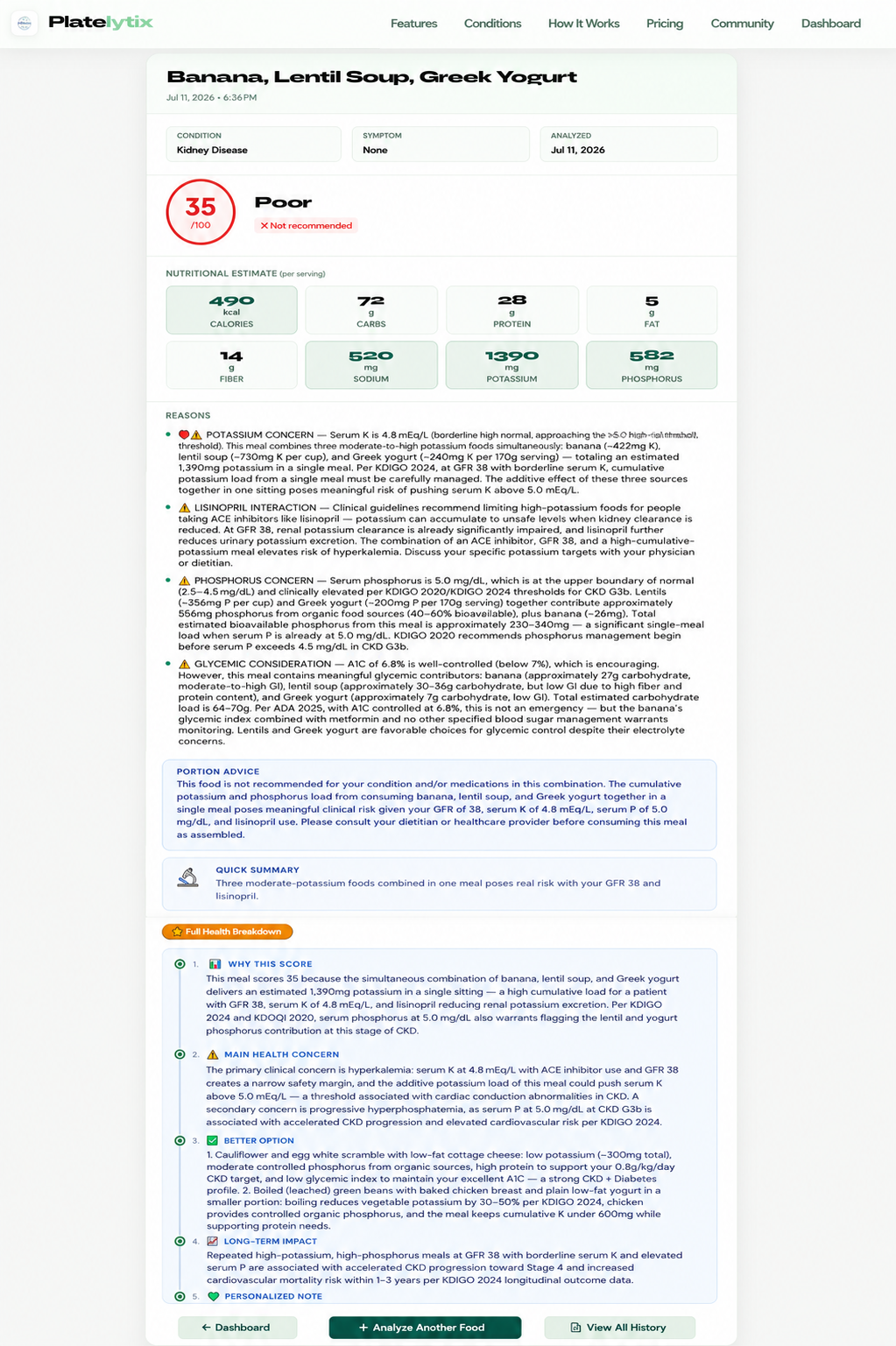
- High-potassium, high-GI foods: bananas, orange juice, potatoes — dangerous for both conditions simultaneously
- Whole grains in large portions: heart-healthy for most people but high in phosphorus for CKD — small portions only
- Legumes in large amounts: diabetes guidelines recommend legumes for fiber but they are high in potassium and phosphorus for CKD — small rinsed portions only
- Processed foods: high in both sodium (hypertension risk) and phosphate additives (CKD risk) and refined carbs (diabetes risk) — triple problem
- Salt substitutes: contain potassium chloride — dangerous on ACE inhibitors which are standard treatment for both conditions
Can I eat legumes with CKD and diabetes?
In small rinsed portions, yes — legumes are high in potassium and phosphorus, but rinsing canned lentils or chickpeas reduces potassium content by up to 30%. Your specific lab values determine your actual tolerance.
Managing Medications for Both Conditions
- Metformin + ACE inhibitor/ARB: the standard combination for CKD + diabetes (diabetes control plus kidney protection and blood pressure). Metformin is contraindicated below eGFR 30 — your physician will likely switch you to insulin or another medication at that point. ACE inhibitors raise potassium, which compounds CKD potassium retention, making hyperkalemia a significant risk on this combination.
- GLP-1 agonists (e.g. Ozempic): if added for diabetes management, protein targets need extra attention since both conditions affect protein guidelines differently. See our Ozempic eating guide for details.