IBS Diet: Low-FODMAP Foods to Eat and Avoid
Low-FODMAP Foods Safe for IBS
- Vegetables: carrots, cucumber, bell peppers, zucchini, spinach (small amounts), green beans, tomatoes (small)
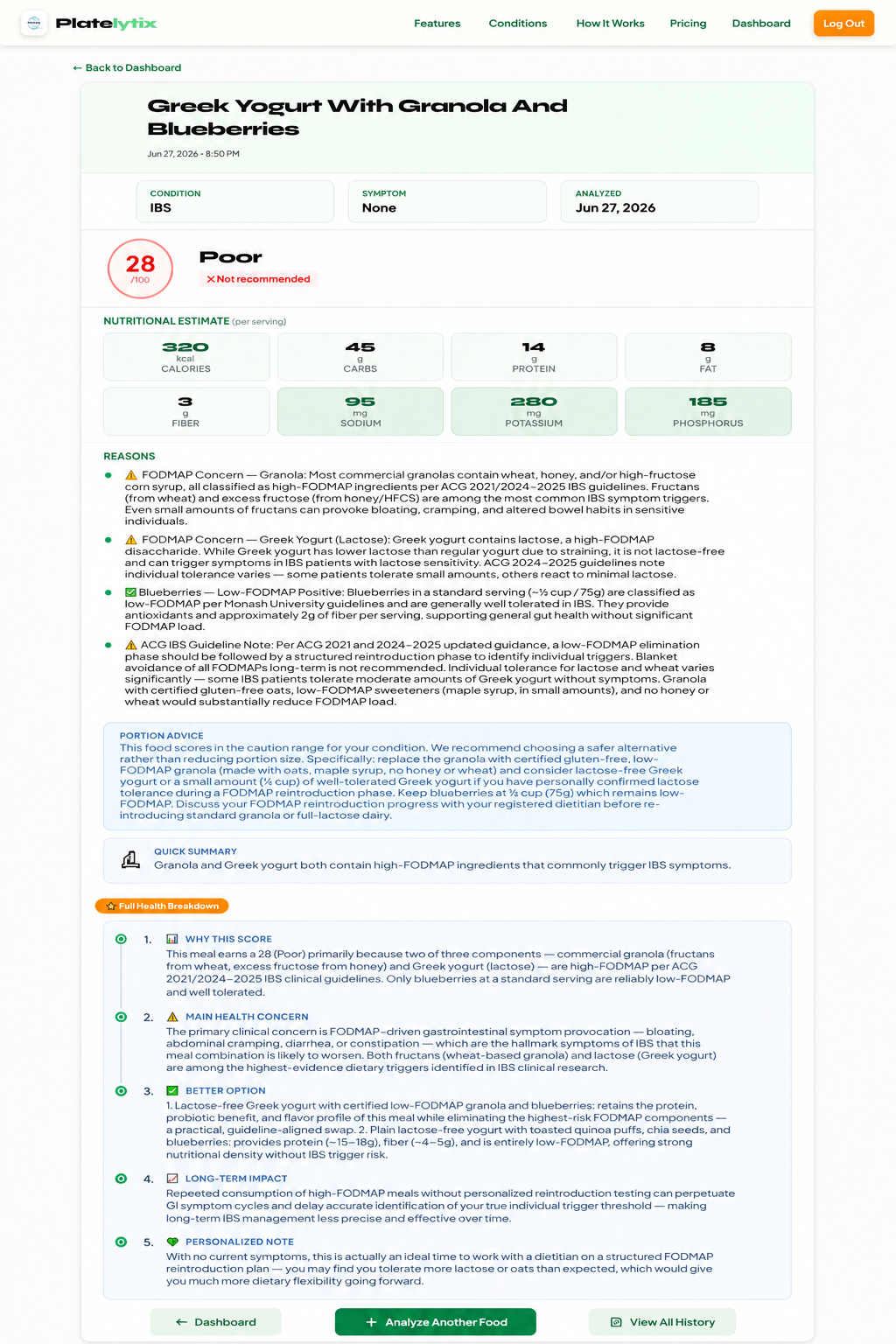
- Fruits: bananas (firm), blueberries, strawberries, grapes, oranges, kiwi
- Proteins: chicken, beef, fish, eggs, tofu (firm) — proteins do not contain FODMAPs
- Grains: white rice, oats (1/2 cup serving), gluten-free pasta, sourdough spelt bread
- Dairy alternatives: lactose-free milk, almond milk, hard cheeses
What foods are safe on a low-FODMAP diet?
Low-FODMAP foods safe for IBS include firm bananas, blueberries, strawberries, grapes, oranges, carrots, cucumber, bell peppers, zucchini, green beans, spinach in small amounts, white rice, oats, gluten-free pasta, firm tofu, chicken, beef, fish, and eggs. The key principle is that proteins contain no FODMAPs — the restrictions apply to specific carbohydrates found in certain fruits, vegetables, grains, and dairy.
Can I eat garlic on a low-FODMAP diet?
Garlic itself is one of the highest FODMAP foods and is one of the most potent IBS triggers — but garlic-infused oil is safe because FODMAPs do not transfer into oil during infusion. This is one of the most practical low-FODMAP substitutions — you get the flavor without the fructans that trigger symptoms.
How long does the low-FODMAP elimination phase last?
ACG 2021 guidelines and Monash University research recommend the elimination phase last 4-6 weeks, followed by systematic reintroduction of individual FODMAP groups one at a time. The goal is the least restrictive diet that controls your symptoms — not permanent elimination of all FODMAPs, since individual tolerance varies significantly and most people can tolerate moderate amounts of some high-FODMAP foods.
WHAT DO THE LETTERS IN FODMAP ACTUALLY STAND FOR?
FODMAP stands for Fermentable Oligosaccharides, Disaccharides, Monosaccharides, And Polyols. Oligosaccharides include fructans and galacto oligosaccharides found in wheat, onions, garlic, and legumes. Disaccharides refers to lactose, the sugar in dairy. Monosaccharides refers to excess fructose found in certain fruits and sweeteners. Polyols are sugar alcohols like sorbitol and mannitol found naturally in some fruits and used as artificial sweeteners.
WHY DO FODMAPS CAUSE IBS SYMPTOMS?
FODMAPs are short chain carbohydrates that your small intestine absorbs poorly. As they move through your gut they draw extra water into the intestine and then get fermented by gut bacteria once they reach the colon, producing gas. In a typical gut this passes without much notice but in IBS, the intestinal nerves are unusually sensitive, so even a small amount of extra gas and fluid can trigger noticeable bloating, cramping, and altered bowel habits.
DOES FIBER HELP WITH IBS?
Fiber can help particularly for constipation predominant IBS, but the type of fiber matters. Soluble fiber found in beans, oats, and fruit, tends to be better tolerated and more helpful for IBS than insoluble fiber found in whole grain products and vegetable skins. Most adults benefit from 22 to 34 grams of fiber daily, added gradually since a sudden increase can itself cause gas and bloating.
HOW DOES FODMAP REINTRODUCTION ACTUALLY WORK?
Reintroduction isn't done food by food; it's done by FODMAP subtype. You test one FODMAP category at a time, typically using a specific challenge food known to be high in only that subtype over about three days while tracking your symptoms. Between each challenge, you return to the strict elimination diet for a few days to avoid overlapping effects before testing the next subtype. This is why working with a dietitian familiar with FODMAPs makes the process far more manageable than guessing on your own.
HOW MUCH OF A HIGH FODMAP FOOD CAN I ACTUALLY EAT?
FODMAP content is often about portion size NOT a strict yes or no. A firm banana is low FODMAP but a very ripe one is higher in fructans. An eighth of an avocado, about two tablespoons, is generally low FODMAP, while a quarter avocado or more becomes high in sorbitol. Checking specific serving sizes such as through the Monash University FODMAP app, is more useful than treating a food as universally "safe" or "unsafe."
WHAT ABOUT DRINKS ON A LOW FODMAP DIET?
Lower FODMAP drink choices include weak black or green tea, drip coffee, water, and most spirits in moderation. Higher FODMAP drinks to watch for include apple, orange, and tomato juice, strong chai, chamomile, or oolong tea, cola, port and rum, and specialty espresso drinks made with regular cow's milk rather than lactose free or plant based alternatives.
DOES DIET WORK DIFFERENTLY FOR IBS-C, IBS-D, AND IBS-M?
IBS has three main subtypes, and diet strategy shifts somewhat by subtype. For constipation predominant IBS (IBS-C), extra soluble fiber and consistent hydration tend to help most. For diarrhea predominant IBS (IBS-D), limiting caffeine, alcohol, and high fat meals alongside the low FODMAP approach tends to matter more. Mixed type IBS (IBS-M) often benefits from a flexible combination of both strategies, adjusted based on which symptoms are dominant at a given time.
GENERAL EATING HABITS THAT HELP ALONGSIDE LOW FODMAP CHANGES
A few general habits are considered first line advice for IBS independent of FODMAP status: eating regular meals at a slower pace, stopping at fullness rather than eating past it, drinking at least eight cups of fluid daily, and limiting tea and coffee to about two cups per day.
High-FODMAP Foods to Avoid with IBS
- Onion and garlic: among the most potent IBS triggers — use garlic-infused oil instead (FODMAPs do not transfer to oil)
- Wheat-based foods in large amounts: bread, pasta, cereals — fructan content triggers symptoms
- Legumes: lentils, chickpeas, kidney beans in large portions — reduce portion or use canned/rinsed
- High-fructose fruits: apples, pears, watermelon, mangoes, cherries
- Lactose: regular milk, soft cheeses, yogurt — switch to lactose-free versions
- Sweeteners: honey, high-fructose corn syrup, sorbitol, xylitol, mannitol
Is gluten-free the same as low-FODMAP?
No. Gluten-free eliminates gluten protein while low-FODMAP eliminates fermentable carbohydrates, and many gluten-free products contain high-FODMAP ingredients like honey, apple juice, or inulin. Always check the full ingredient list rather than relying on a gluten-free label when following a low-FODMAP diet for IBS.
FODMAP STACKING: WHY "SAFE" FOODS CAN STILL CAUSE SYMPTOMS TOGETHER
Eating several low FODMAP foods that share the same FODMAP subtype in a single meal can add up to a symptom triggering dose even when each food is individually considered safe. For example, a small portion of broccoli might be fine on its own but combining it with cauliflower and mushrooms in the same meal can stack similar FODMAPs past your personal tolerance threshold.
IS WHEAT SENSITIVITY IN IBS ACTUALLY ABOUT GLUTEN?
Not always. Wheat is high in fructans, an oligosaccharide FODMAP, independent of its gluten content. Some people who feel better avoiding wheat products may actually be reacting to the fructans rather than the gluten protein itself, which is part of why a low FODMAP approach sometimes explains symptom improvement that gets mistakenly credited to going gluten free.
NUTRIENT DEFICIENCY RISKS DURING THE ELIMINATION PHASE
Following the strict elimination phase without guidance can risk shortfalls in calcium, iron, zinc, magnesium, and B vitamins, particularly thiamin and riboflavin since several of the excluded food groups are meaningful sources of these nutrients. This is a central reason the elimination phase is meant to be short and supervised rather than an open ended way of eating.
WHO SHOULD NOT START THIS DIET WITHOUT CLOSE MEDICAL SUPERVISION
The low FODMAP diet is not appropriate to self start if you are already underweight, have a history of disordered eating such as orthorexia or avoidant restrictive food intake disorder, or are a child, since the elimination phase removes a large number of foods and can lead to unintended weight loss or reinforce restrictive eating patterns. Tell your healthcare provider if any of this applies to you before beginning.
IBS and Medication Considerations
Some IBS medications affect nutritional absorption. Antispasmodics may reduce gastric motility — eating smaller, more frequent meals is recommended. If you take antidepressants for IBS-D, consistent meal timing supports medication effectiveness. Probiotics are supported by ACG guidelines for IBS but strain selection matters — discuss with your gastroenterologist.